Featured

Top Performing Financial Wellness Tools for 2026
Table of Contents
Incorporate retirement strategies, health cost savings accounts, and workplace advantages into the monetary structure. An easy monetary plan relies on clarity, structure, and consistent execution.
These actions create a structure for better monetary decisions throughout 2026. Financial investment recommendations provided through OneDigital Investment Advisors LLC. It is not planned to provide and ought to not be relied on for tax, legal or accounting recommendations and are not suitable to any person or company's specific circumstances.
Using Digital Tools for Better Financial Wellness
Additionally, any declarations made reflect our views and/or best estimates, are not intended to guarantee any specific result.
A monetary plan is your roadmap for managing money. According to the Consumer Financial Security Bureau (CFPB) in its Financial Empowerment Toolkit, the key components of an effective monetary strategy consist of budgeting, setting objectives, and structure knowledge. Without a plan, it is easy to spend beyond your means, accumulate financial obligation, or miss out on chances to save for emergencies and long-term objectives like home ownership, education, or retirement.
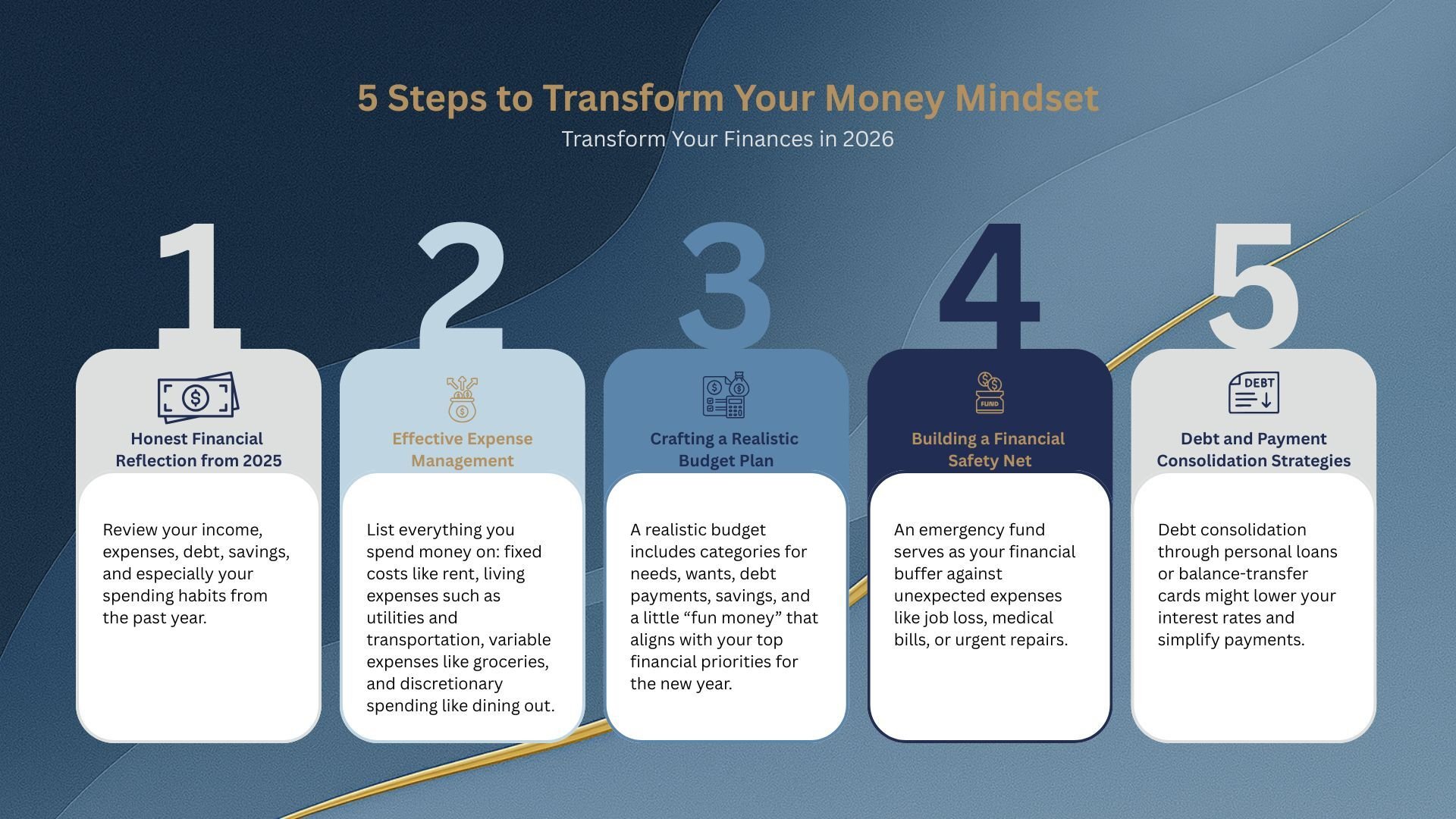
This provides you a standard from which to construct your strategy. Note your earnings sources (salaries, benefits, side work). Catalog month-to-month costs (rent/mortgage, groceries, energies, debt payments, discretionary costs).
Short-term objectives might include: To build an emergency fund, reduce charge card financial obligation, or plan a trip. Suggested long-term objectives might be: To save for a home down payment, prepare for retirement, or fund college. Budgeting is a central part of a monetary plan. At its core, a budget answers where your cash goes and how to direct it toward your goals.
To build your budget, try using the FTC's Spending plan Worksheet. Ensure to: Note all earnings and costs. Subtract expenditures from earnings to see what you have left. Change spending where necessary to avoid shortages. To stabilize concerns, the CFPB suggests using a versatile budgeting approach such as the 50/30/20 guideline, which designates approximately half of your income to requirements, 30 percent to desires, and 20 percent to cost savings and financial obligation payment.
The Benefits of Consolidating Liability With Professional Help
The FDIC suggests that an emergency situation fund at least six months of living expenses to help you handle unforeseen occasions like medical expenses or task loss.
Financial literacy also assists protect you from scams and scams. The DFPI and other customer protection agencies offer tools and resources to help you with preparation:.
JPMorgan Chase & Co., its affiliates, and staff members do not supply tax, legal or accounting recommendations. This material has actually been prepared for informational functions only, and is not meant to offer, and need to not be relied on for tax, legal and accounting guidance. You must consult your own tax, legal and accounting consultants before engaging in any financial transaction.
Ways to Boost Your Credit Effectively in 2026
If you do not expect to understand net capital gains this year, have net capital loss carryforwards, are concerned about deviation from your model investment portfolio, and/or undergo low income tax rates or invest through a tax-deferred account, tax loss harvesting might not be optimum for your account.
Buying set income products is subject to certain threats, consisting of rates of interest, credit, inflation, call, prepayment and reinvestment threat. Any set earnings security sold or redeemed prior to maturity might go through considerable gain or loss. This website material is for information/educational purposes just and might inform you of particular product or services offered by personal banking organizations, part of JPMorgan Chase & Co.
Not all product or services are used at all areas. Any views, techniques or items gone over in this material may not be suitable for all individuals and are subject to dangers. Financiers may return less than they invested, and previous efficiency is not a reliable indicator of future results.
Selecting the Right Card Option in 2026
Absolutely nothing in this material must be trusted in isolation for the function of making a financial investment choice. You are prompted to consider thoroughly whether the services, products, asset classes (e.g. equities, set earnings, alternative investments, products, etc) or methods talked about are appropriate to your requirements. You need to likewise think about the objectives, threats, charges, and expenditures connected with an investment service, item or strategy prior to making an investment choice.
Morgan team. Specific information consisted of in this material is thought to be trustworthy; nevertheless, J.P. Morgan does not represent or necessitate its accuracy, dependability or efficiency, or accept any liability for any loss or damage (whether direct or indirect) arising out of using all or any part of this material.
J.P. Morgan presumes no responsibility to upgrade any info on this site in the event that such details modifications. Views, opinions, quotes and strategies expressed herein might differ from those revealed by other areas of J.P.
Any projected results forecasted outcomes are based solely on exclusively examples theoretical, mentioned actual results and risks will dangers depending differ specific circumstancesParticular
You need to consult your own tax, legal and accounting advisors before engaging in any monetary deals Please check out the Legal Disclaimer for J.P.
PANAMA CITY, Fla. (WJHG/WECP) - As 2025 comes to a close, many people are beginning to set New Year's resolutions, with financial planning monetary high for 2026. Financial consultant Ashley Terrell stated about 85% of Americans report feeling anxious about their finances, while roughly one in four do not have an emergency situation fund.

Latest Posts
Ways to Best Design a New Budget Roadmap
Consolidating Total Payments to One Single Payment

Achieving Budget Stability through Expert Planning